We’ve been driving innovation in our industry for over 20 years. Talk to one of our experts and take the next step.

Contact
arrow_left_alt

AI / Copilot

We’ve been driving innovation in our industry for over 20 years. Talk to one of our experts and take the next step.

Contact
arrow_left_alt

Productivity

arrow_left_alt

Industries

We’ve been driving innovation in our industry for over 20 years. Talk to one of our experts and take the next step.

Contact us

4 March 2026

Better Decision Support in Process Manufacturing with Business Central and Power BI

ERP

The Process Industry

Process manufacturers operate in complex environments where production efficiency, inventory levels, and financial performance are closely interconnected. To make confident decisions, leaders need more than isolated reports—they need connected data across the entire organization.

Table of contents

The Need for Connected Data in Process Manufacturing

Effective decision support in process manufacturing depends on having reliable data from across the organization. Production, supply chain, inventory, and finance all influence operational performance. When these functions operate with disconnected systems or separate reports, decision-making slows down and the risk of errors increases.

Many organizations still rely on multiple data sources—spreadsheets, departmental systems, or manually compiled reports. This often results in different teams working with different versions of the truth.

Connected data solves this challenge. When the entire organization uses the same operational information, leadership teams gain a clear and consistent view of performance.

This shared visibility creates both clarity and speed in decision-making.

Business Central as the Foundation for Operational Data

Microsoft Dynamics 365 Business Central serves as the core data platform for many modern process manufacturing organizations. The ERP system collects and connects operational data across the business, including:

  • Production processes and operational flows
  • Inventory levels and material consumption
  • Purchasing and supplier information
  • Revenue, costs, and financial performance

By centralizing this data in a single system, Business Central creates what many organizations refer to as a single source of truth. Instead of maintaining parallel systems and inconsistent reports, teams can rely on the same operational data across departments.

This foundation is essential for building reliable decision support in process manufacturing.

Power BI for Decision Support and Analysis

While ERP systems collect operational data, analytics platforms transform that data into insight.

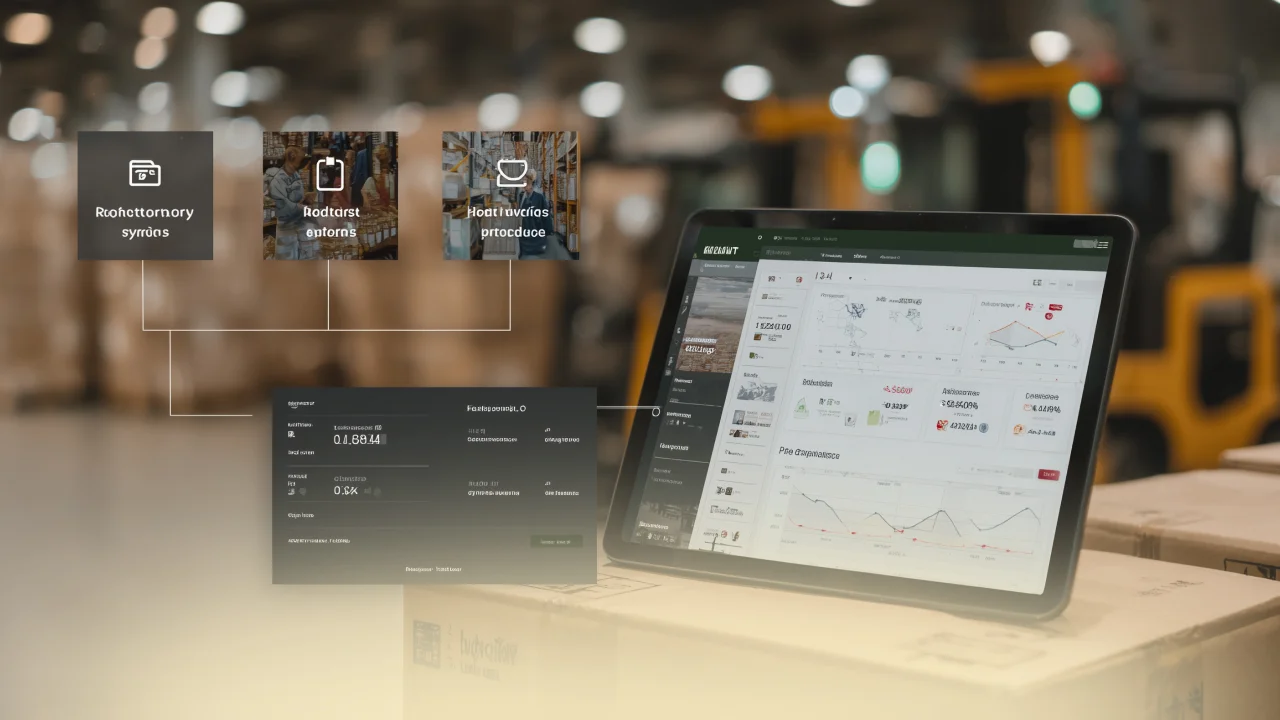
When Business Central data is connected to Microsoft Power BI, organizations gain powerful visual analytics that make operational performance easier to understand.

With Power BI, leaders can quickly analyze:

  • Production efficiency and trends
  • Inventory movement and material consumption
  • Cost development and profitability
  • Operational deviations or performance changes

Instead of manually compiling reports, teams gain real-time dashboards and interactive visualizations that reveal trends immediately.

This significantly improves decision support in process manufacturing, enabling organizations to respond faster to operational changes.


Production, Inventory, and Finance in One View

One of the greatest benefits of integrated ERP and analytics platforms is the ability to view operational relationships across the entire business.

When production, inventory, and financial data appear within the same reporting environment, important connections become clear:

  • How production output affects inventory levels
  • How inventory levels influence working capital
  • How operational efficiency affects profitability

Traditional reporting often separates these perspectives. Integrated reporting shows how they influence each other.

This holistic view gives leadership teams stronger decision support in process manufacturing and enables more strategic planning.

From Reporting to Operational Decision Support

Many companies use reports primarily to summarize what has already happened. However, the real value of modern analytics platforms lies in their ability to support ongoing operational management.

With connected ERP data and real-time analytics, organizations can move from retrospective reporting to proactive management.

Operational leaders can:

  • Identify production issues earlier
  • Monitor inventory trends before they impact cash flow
  • Detect cost deviations in real time
  • Make faster, data-driven decisions

In this way, decision support in process manufacturing becomes an active part of daily operations—not just a reporting function.

FAQ

arrow_circle_down

At NAB Solutions, we’re more than a vendor — we’re a partner. That means we start with your business, not the product. We focus on understanding your needs, goals, and challenges to create solutions that actually solve them, rather than selling features you don’t need.

With extensive experience, proven methods, and hundreds of successful projects, we know what works in practice. And we stay with you all the way — from strategy and implementation to day‑to‑day use and continuous improvement.


arrow_circle_down

The solution provides efficient production planning, optimized material requirements planning (MRP), digital batch records and electronic batch records (EBR), quality control, and automated workflows — all in a single system that also integrates finance, purchasing, and inventory.

arrow_circle_down

With Business Central, you get built‑in support for traceability, batch management, and quality controls throughout the entire production process — from raw materials to finished products. Digital documentation, batch records, and clear audit trails create a structured foundation that makes it easier to meet regulatory requirements, work consistently, and demonstrate compliance during internal and external audits.

Ready to move from reports to real decision support?

Contact us
close

Get in touch!

Fill in your details and we’ll get back to you shortly!

Please enter your first name.

Please enter your last name.

Please enter your email.

Please enter your phone number.

By subscribing to our newsletter, your personal data will be processed in accordance with NAB’s privacy policy.

Related news

close

Subscribe to our newsletter

Get the latest industry news and updates delivered straight to your inbox.

Please enter your first name.

Please enter your last name.

Please enter your email.

By subscribing to our newsletter, your personal data will be processed in accordance with NAB's privacy policy.