We’ve been driving innovation in our industry for over 20 years. Talk to one of our experts and take the next step.

Contact
arrow_left_alt

AI / Copilot

We’ve been driving innovation in our industry for over 20 years. Talk to one of our experts and take the next step.

Contact
arrow_left_alt

Productivity

arrow_left_alt

Industries

We’ve been driving innovation in our industry for over 20 years. Talk to one of our experts and take the next step.

Contact us

April 22nd, 2026

Validate with confidence – compliant and secure.

Medical device manufacturing

Pharmaceutical and medical technology companies are required to validate their software to meet strict compliance standards. Computer systems must deliver precise data to ensure safe drug production, as even the smallest error can put patient safety at risk. Compliance with regulations from authorities such as the FDA is essential. Proper computer system validation not only ensures regulatory adherence but also brings tangible benefits: reliable products, higher customer satisfaction, reduced costs from fewer complaints, and a stronger company reputation built on uncompromising quality.

Table of contents

It’s non-negotiable: companies in the pharmaceutical and medical technology sectors must validate their software and comply with strict regulatory requirements. Computer systems used in the manufacturing, testing, and documentation of sensitive products such as medicines must deliver precise and reliable data. There is no room for deviation – because nothing matters more than patient safety.

Strict requirements from regulatory authorities

In software-supported manufacturing, for example, dosage is calculated automatically. Even the slightest error can result in defective products, deviations from strict standards, and risks to patient safety. That’s why regulatory authorities such as the FDA (Food and Drug Administration) and the EMA (European Medicines Agency) set binding requirements that must be met when using software in production.

Computer system validation as a driver of business success

Computer system validation can deliver substantial benefits for your company. Safe, high-quality products lead to satisfied customers and reduce the risk of complaints. This not only helps you avoid the unnecessary costs of handling returns but also strengthens your company’s reputation for uncompromising quality – while protecting you from legal consequences. In short: you lay the foundation for long-term success and sustainable growth.

But to achieve the desired safety, full regulatory compliance, and consistent quality, you must first navigate the validation process successfully – and here lie potential pitfalls that, if approached incorrectly, can quickly become stumbling blocks.

The four biggest challenges in computer system validation

Underestimating the complexity of strict regulations

Standards such as GxP, 21 CFR Part 11, and EU-GMP Annex 11 define the requirements for computer system validation. Anyone who works with them quickly realizes: they are extensive and regularly updated. And that’s a good thing – after all, we’re dealing with sensitive products. But only when every detail is carefully considered and implemented can patients receive safe and reliable products.

Lacking the necessary expertise

Meeting the technical and regulatory demands of computer system validation requires in-depth expertise and a proven project methodology. Few companies have both in place. The result? Delays and a higher risk of errors. In today’s competitive market, where time is critical, this not only slows you down but also puts product quality at risk.

Operating under cost and time pressure

Strong competition and economic uncertainty increase the pressure to bring products to market quickly and efficiently. The temptation is great to cut corners in the validation process. But doing so can compromise product quality, patient safety, and ultimately your company’s reputation – or even regulatory approval.

Validating software in the public cloud

A successful process validation confirms that a system consistently and securely fulfills its intended purpose at the time of testing. However, updates inevitably bring changes that must be tested and reapproved. These recurring validation cycles require careful planning so that they become routine processes – ideally supported by automation and continuous testing wherever possible.

4 tips for successful computer system validation

Rely on experienced experts for a safe and focused validation process

Bring professional expertise into your validation project by partnering with seasoned specialists. Drawing on practical experience from numerous projects, deep technical knowledge, and proven methodologies, you can navigate the validation process securely and with confidence. The right software solution not only ensures compliance but also clears the path for innovation and drives your business forward.

Use a risk-based approach to simplify complexity while ensuring compliance

To reduce complexity without compromising safety or compliance, experienced validation partners apply a risk-based approach. Instead of testing all processes equally, the focus is placed on critical areas that directly impact product quality.

Build internal know-how through regular training

Strengthen your team’s understanding of validated software solutions with regular training sessions. These should cover both technical and regulatory aspects to ensure all stakeholders are equipped with the knowledge they need.

Turn public cloud validation into a success with the right strategy

With the right approach, validating computer systems in the public cloud becomes a success story. By developing a clear cloud strategy and working with the right partner, you can implement your ERP system in a compliant, validated way – meeting the requirements of EU GMP Annex 11 not just today, but well into the future.


Compliance, built into your ERP

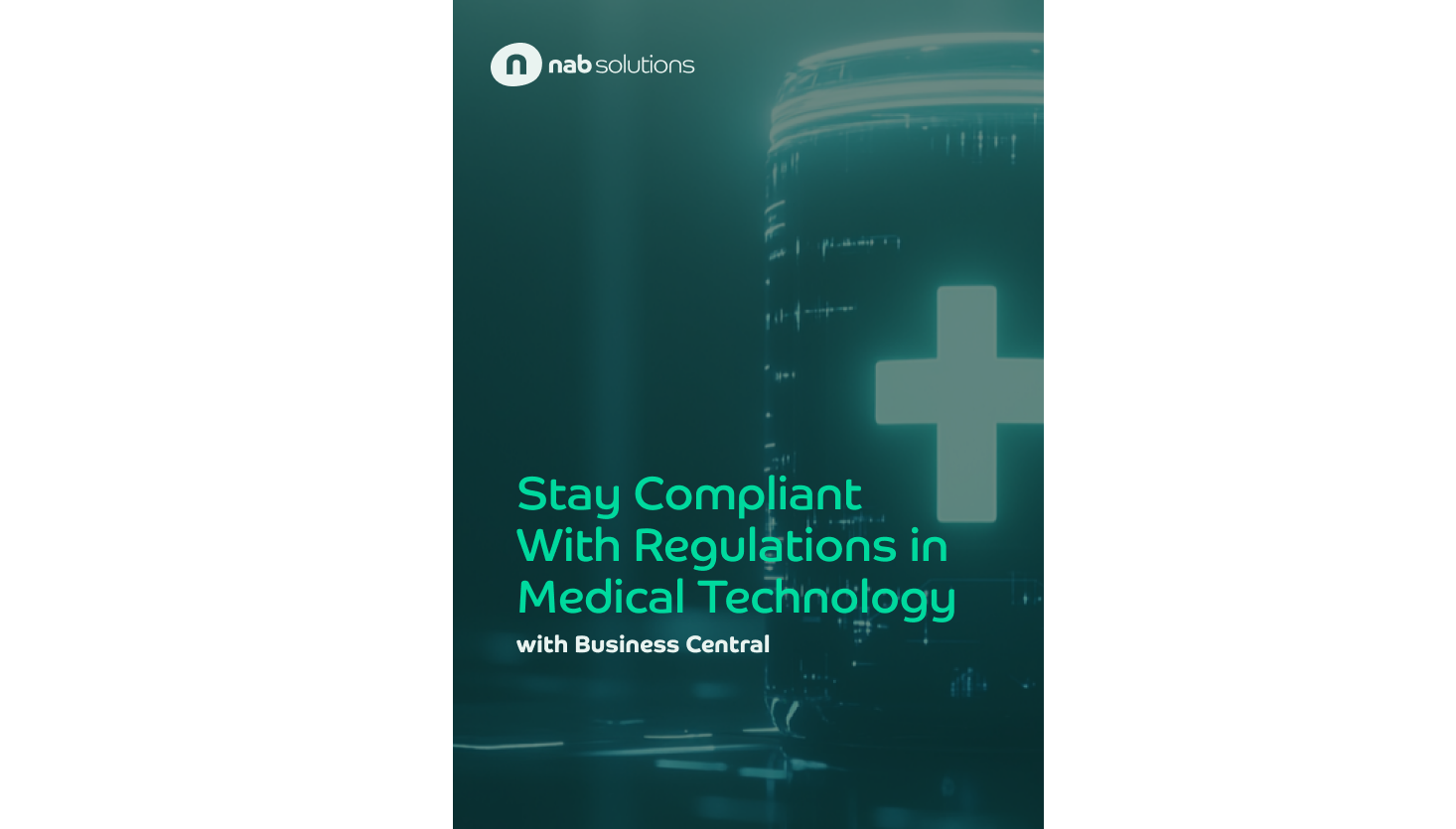
Learn how Microsoft Dynamics 365 Business Central supports MedTech companies in meeting complex compliance requirements, simplifying validation processes, and ensuring full traceability across operations. Discover how a modern, modular ERP helps you manage quality, reduce manual work, and stay audit-ready in a highly regulated environment.

FAQ

arrow_circle_down

At NAB Solutions, we’re more than a vendor — we’re a partner. That means we start with your business, not the product. We focus on understanding your needs, goals, and challenges to create solutions that actually solve them, rather than selling features you don’t need.

With extensive experience, proven methods, and hundreds of successful projects, we know what works in practice. And we stay with you all the way — from strategy and implementation to day‑to‑day use and continuous improvement.


arrow_circle_down

The solution provides efficient production planning, optimized material requirements planning (MRP), digital batch records and electronic batch records (EBR), quality control, and automated workflows — all in a single system that also integrates finance, purchasing, and inventory.

arrow_circle_down

With Business Central, you get built‑in support for traceability, batch management, and quality controls throughout the entire production process — from raw materials to finished products. Digital documentation, batch records, and clear audit trails create a structured foundation that makes it easier to meet regulatory requirements, work consistently, and demonstrate compliance during internal and external audits.

Related news

close

Subscribe to our newsletter

Get the latest industry news and updates delivered straight to your inbox.

Please enter your first name.

Please enter your last name.

Please enter your email.

By subscribing to our newsletter, your personal data will be processed in accordance with NAB's privacy policy.